In this article
- What is personal style, and how is it different from trends?
- Step 1: Look at what you already love
- Step 2: Describe your style in three words
- Step 3: Find your style archetypes
- Step 4: Build a color palette that works for you
- Step 5: Get proportions and fit right
- Choose signature pieces that make your style recognizable
- 2026 fashion trends worth borrowing (not chasing)
- Build a capsule wardrobe around your style
- How to shop for your personal style
- Common personal style mistakes to avoid
- How Outfitual helps you find your style faster
- שאלות נפוצות
תשובה קצרה
How do I find my personal style?
Start with the clothes you already love and look for patterns. Describe your ideal style in three words, pick one or two style archetypes, and build a color palette of three neutrals plus one or two accents. Then test new combinations before you buy. An AI stylist app like Outfitual speeds this up by styling your own wardrobe.
Personal style isn’t something you’re born with or something you buy in one shopping trip. It’s a set of choices that makes you feel most like yourself, repeated until it becomes second nature. Some people find it early. Most of us piece it together through lots of trial and a few memorable errors.
This style guide gives that process some structure. You’ll learn how to spot what already works in your wardrobe, name your style, choose colors with confidence and borrow 2026’s trends without losing yourself in them. Grab a coffee and open your closet. You’ll need it for step one.
What is personal style, and how is it different from trends?
Personal style is the consistent thread running through the way you dress: the shapes, colors, fabrics and attitude you keep returning to. Trends are the seasonal ideas fashion is excited about right now. Your style is the filter you run trends through. When a trend fits your filter, adopt it. When it doesn’t, let it pass without guilt.
Step 1: Look at what you already love
Your wardrobe already holds clues. Pull out the five pieces you wear most and the five outfits you’ve felt best in. Then ask:
- Which colors keep showing up?
- Do you prefer fitted or relaxed shapes?
- Which fabrics do you reach for: crisp cotton, soft knits, denim?
- What do your favorite outfits have in common?
Do the same with the inspiration photos you’ve saved. Patterns appear quickly, and they’re usually more honest than any quiz. It also helps to notice what you never wear. Pieces you avoid tell you which colors, fabrics or fits simply aren’t you, and that’s just as useful.
Step 2: Describe your style in three words
The three-word method is the simplest style tool there is. Choose three words that describe how you want to look and feel, such as “relaxed, polished, warm” or “bold, graphic, playful.” Use one word for the overall mood, one for shape or structure and one for the feeling you want to give off.
Stylist tip
Test every potential purchase against your three words. If a piece matches at least two, it probably belongs in your wardrobe.
Step 3: Find your style archetypes
Archetypes are starting points, not boxes. Most people are a blend of two, such as minimal with a streetwear edge. Here are the six directions you can explore in Outfitual:
Minimal
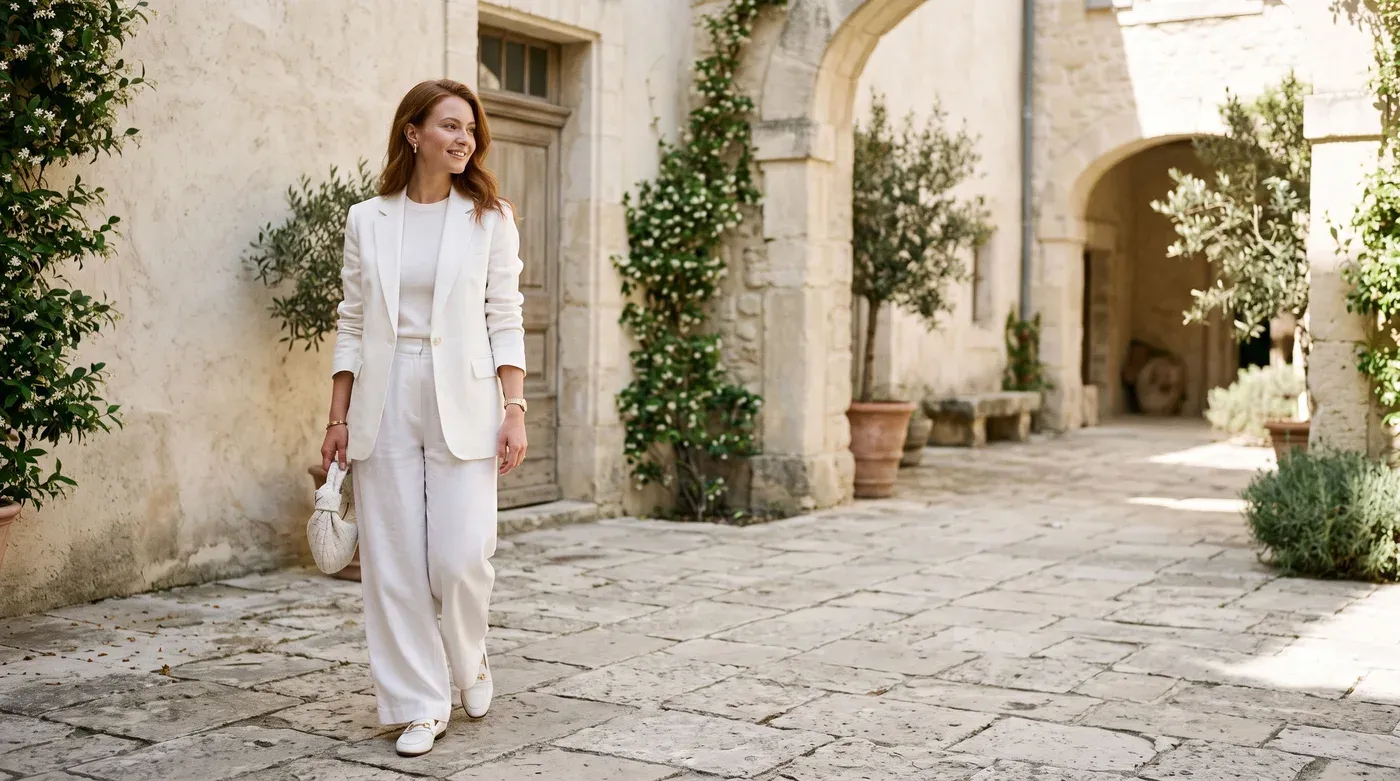
Clean lines, a tight palette and few details. Think tonal outfits, crisp shirts and simple tailoring. Key pieces: a white shirt, straight trousers, a fine knit and minimal leather shoes. Read the minimalist style guide.
Streetwear
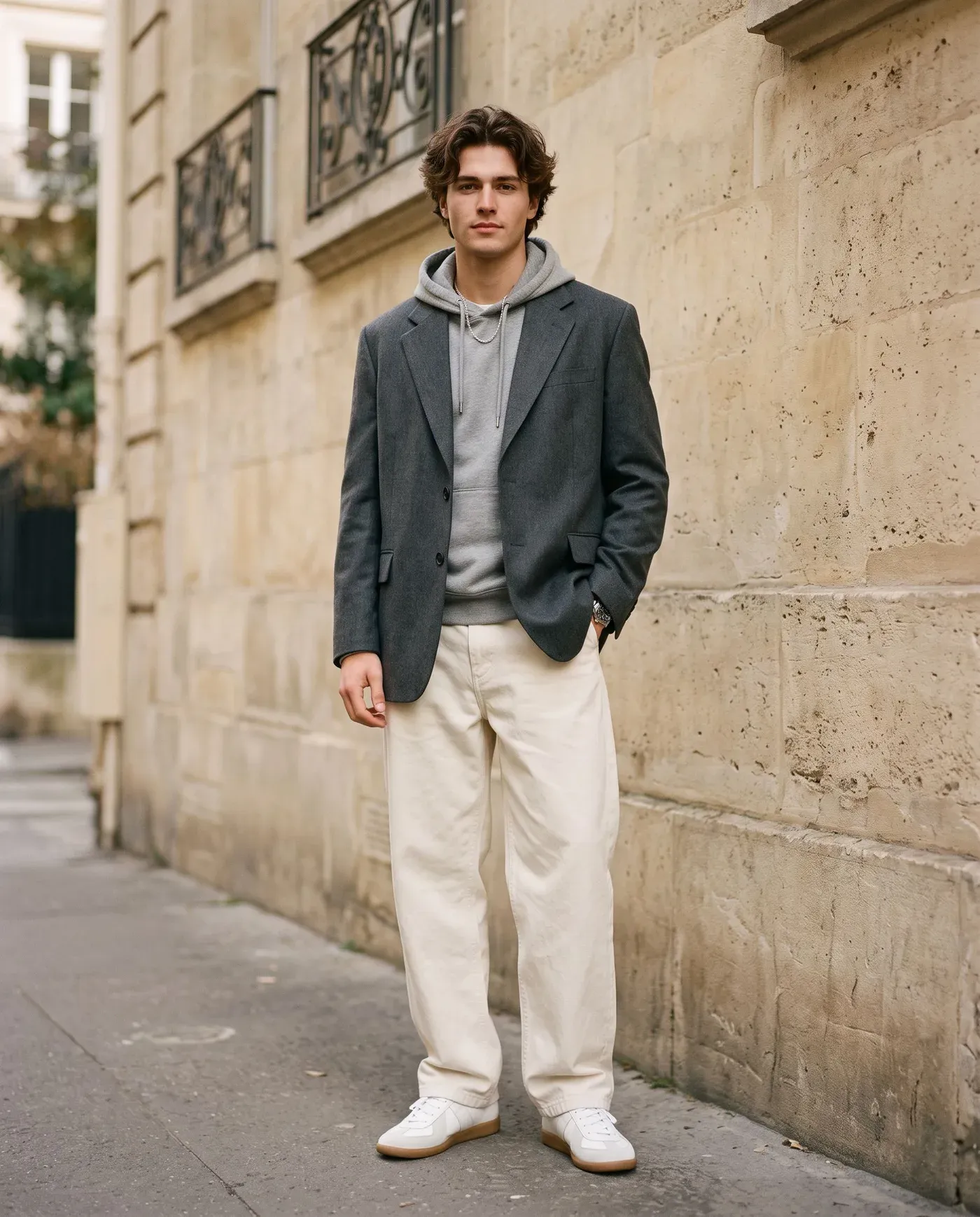
Relaxed proportions, layering and statement sneakers. Comfortable, confident and rooted in everyday pieces. Key pieces: hoodies, bomber jackets, cargo trousers and great sneakers. See the streetwear style guide.
Romantic
Soft fabrics, fluid shapes and small expressive details such as ruffles, lace and delicate prints. Key pieces: blouses, midi skirts, knit cardigans and ballet flats.
Statement
Bold color, strong silhouettes and one piece that leads the look. For people who enjoy being noticed. Key pieces: a colored coat, graphic prints and sculptural accessories.
Relaxed
Easy layers, soft knits and comfort that still looks considered. Key pieces: wide trousers, oversized cardigans, soft T-shirts and clean sneakers. Try our casual chic outfits.
Modern classic
Tailoring, lasting staples and quality basics with a contemporary twist. Key pieces: a navy blazer, a trench coat, oxford shirts and loafers. Explore elegant style and old money style.
Step 4: Build a color palette that works for you
A personal color palette makes getting dressed dramatically easier, because almost everything goes with everything. A reliable formula is three neutrals plus one or two accent colors. For example:
Use the 60-30-10 rule
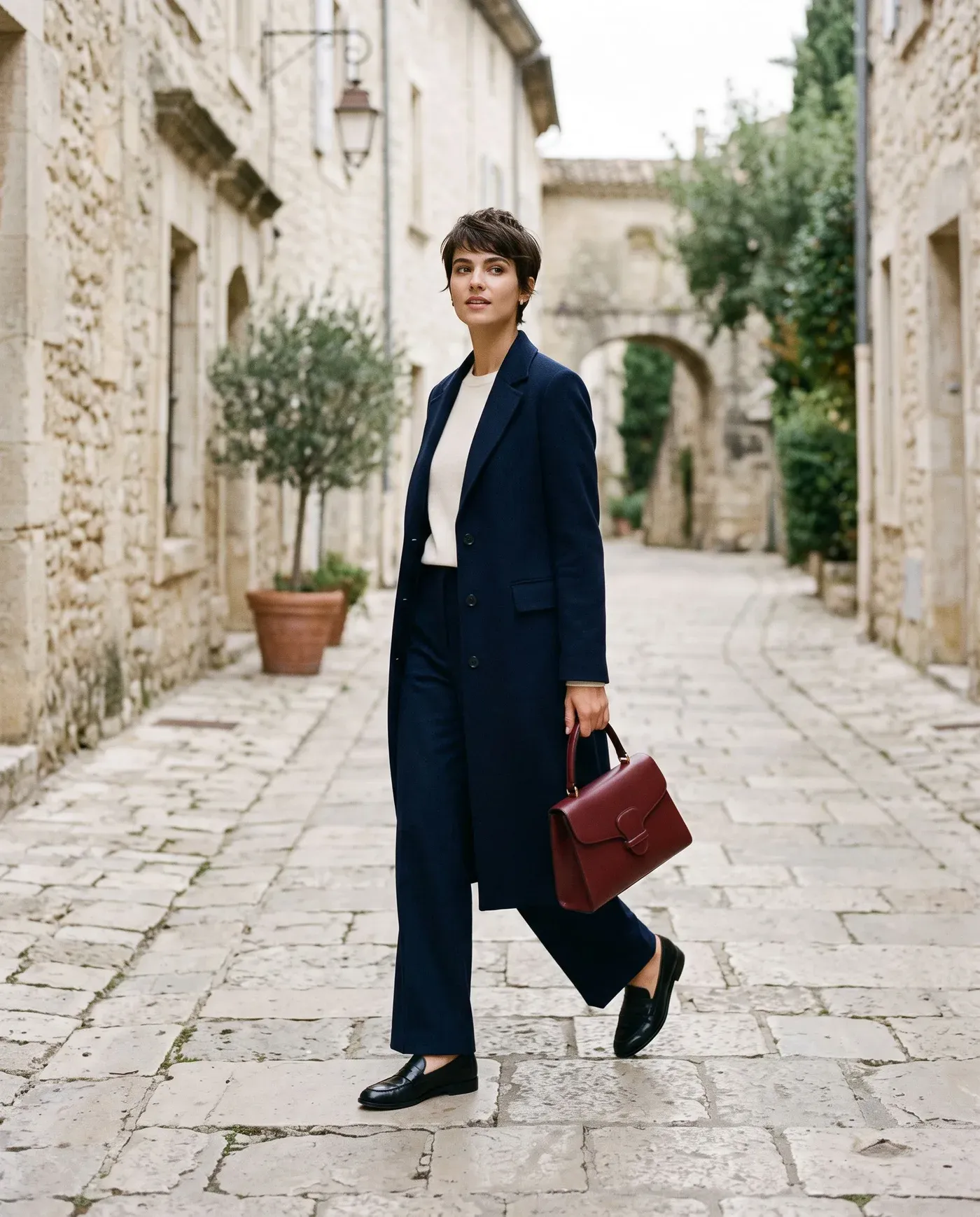
Borrowed from interior design, the 60-30-10 rule keeps outfits balanced: about 60% main color, 30% secondary color and 10% accent. Navy coat and trousers, a cream sweater and a burgundy bag is a perfect example.
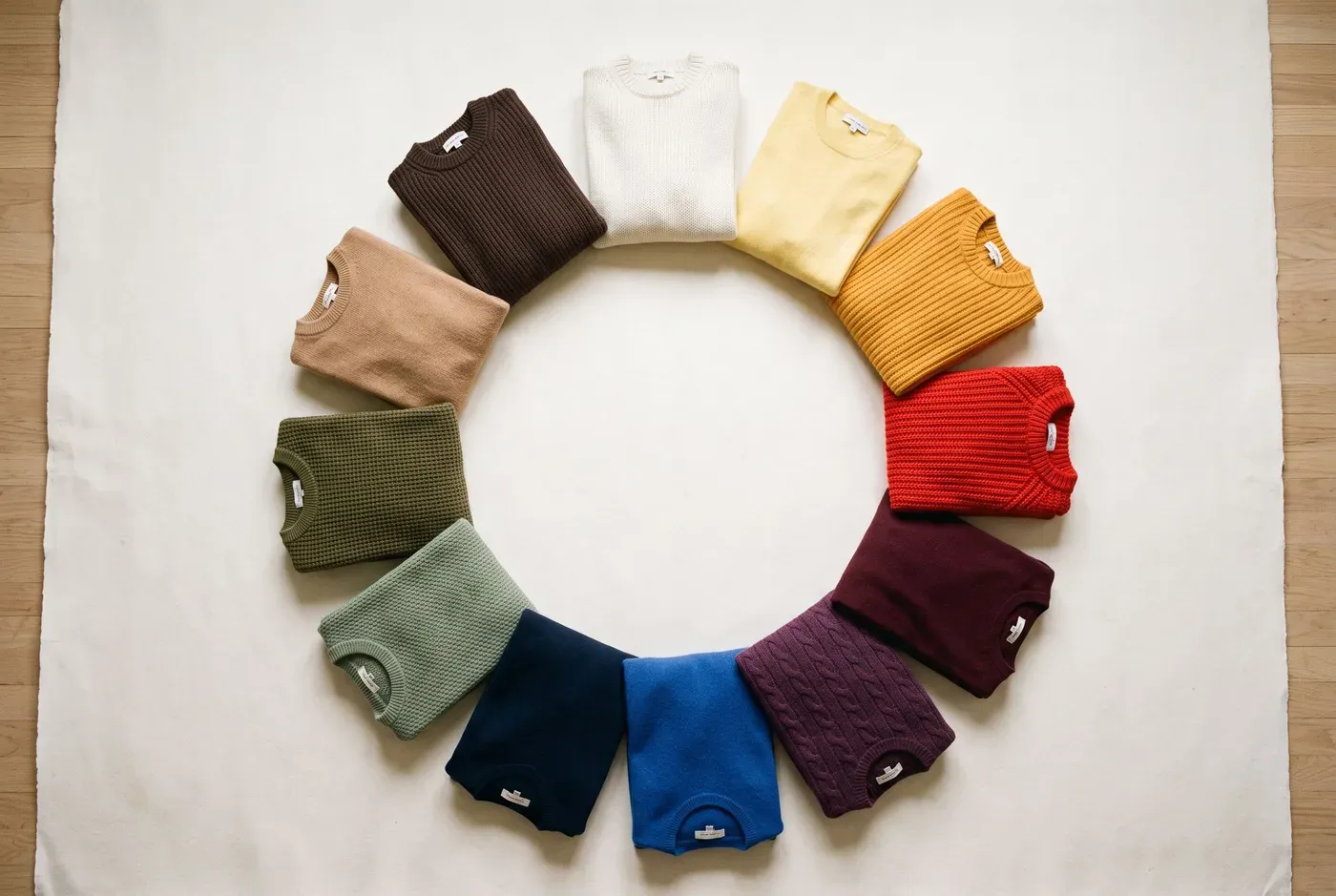
Understand the color wheel
A quick look at the color wheel (opens in a new tab) explains most good combinations. Neighboring colors (analogous) feel calm, while complementary colors (opens in a new tab) opposite each other create energy. Neutrals such as white, cream, camel, grey and navy work with almost anything.
Step 5: Get proportions and fit right
Fit matters more than any trend. A simple rule is to balance volume: pair a relaxed top with a streamlined bottom, or wide trousers with something closer-fitting on top. Make sure shoulders sit correctly and hems land where you want them. A small tailoring adjustment can make an affordable piece look far more expensive. Every body is different, so focus on what feels good rather than rules about what you “should” wear. Notice which necklines, rise heights and lengths you feel most comfortable in, and use them as your personal fit guide.
Choose signature pieces that make your style recognizable
A signature is a small detail people associate with you: round glasses, a vintage watch, a favorite red, always wearing loafers. It makes outfits feel intentional even on lazy days. Choose one or two signatures that match your three words and repeat them often. They’re also the easiest way to show personality in a minimal or modern classic wardrobe.
2026 fashion trends worth borrowing (not chasing)
Trends are most useful as seasoning. Pick the ones that match your three words and ignore the rest. Here’s what’s shaping 2026:
- Soft white minimalism. Pantone’s Color of the Year 2026 is Cloud Dancer (opens in a new tab), a calm white. See how to wear Cloud Dancer.
- Rich, warm tones. Burgundy and brown outfits are back for fall.
- Bold color pairing. Cobalt blue and tomato red suit statement dressers.
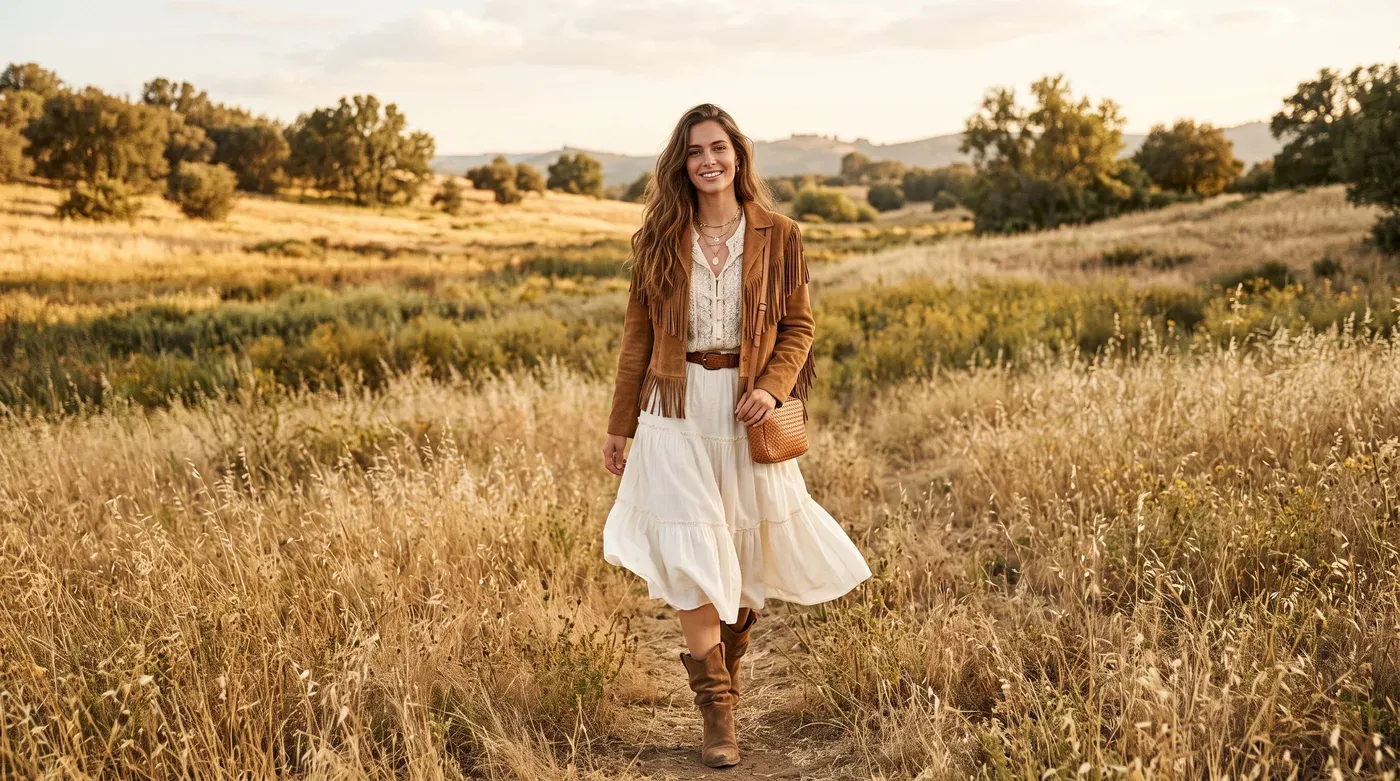
- Softer boho. Suede, fringe and earthy tones in modern boho style.
- The new prep. Navy, cream and utility khaki in new prep outfits.
Build a capsule wardrobe around your style
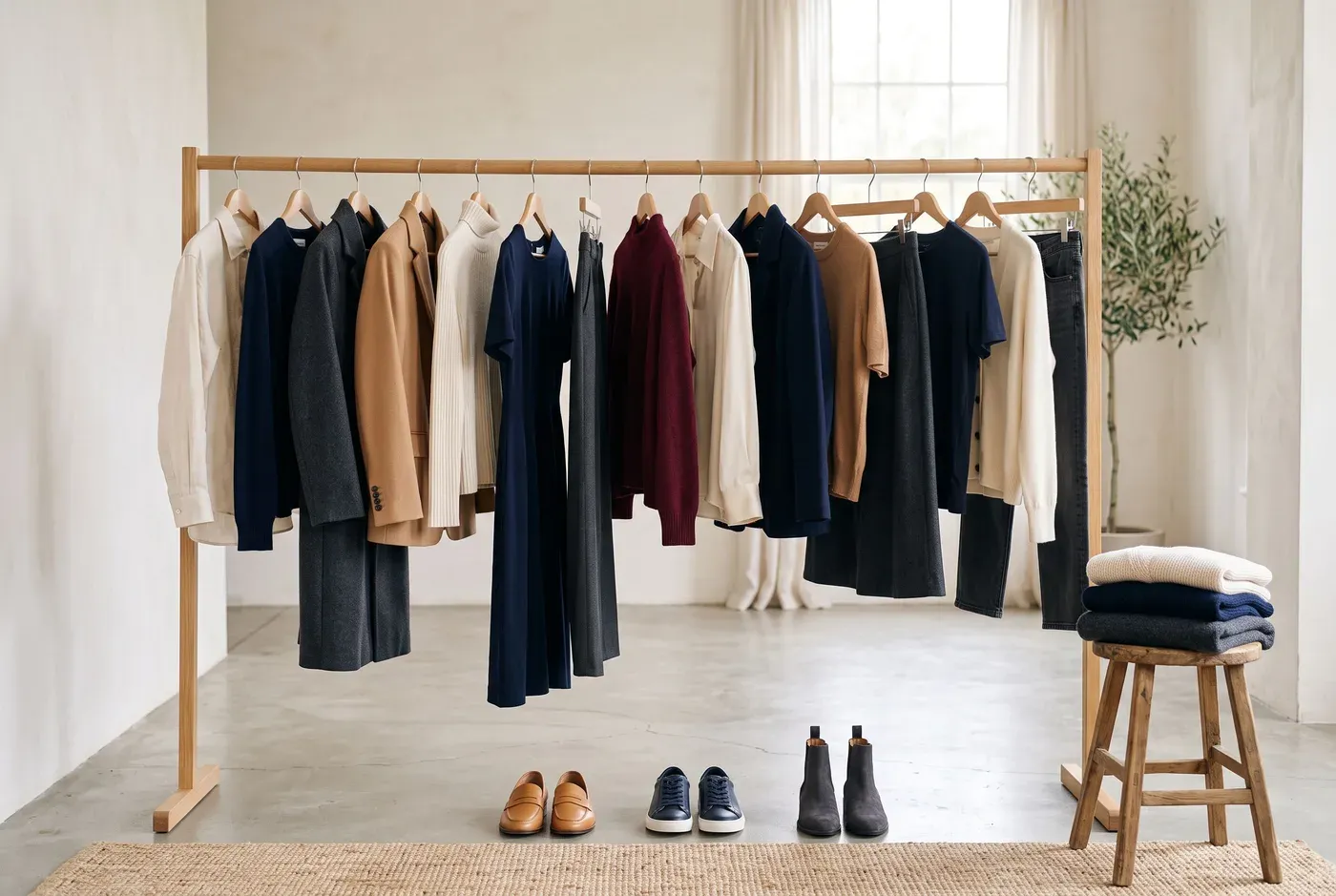
Once you know your style and palette, a capsule wardrobe (opens in a new tab) brings it together: a compact collection of pieces that all work with each other. Around 25 to 35 pieces per season is a common target, but the real goal is versatility, not a magic number.
How to shop for your personal style
Once you know your style, shopping gets easier and cheaper. Before you buy anything, run it through three quick checks:
- Does it match at least two of your three style words?
- Does it fit your color palette?
- Can you style it three ways with pieces you already own?
If the answer to any of these is no, save it to a wishlist and revisit it in a week. Most impulse buys lose their shine by then, while the pieces that truly fit your style will still feel exciting.
Common personal style mistakes to avoid
- Copying someone else’s wardrobe. Inspiration is great, but your lifestyle, climate and budget are your own.
- Buying for a fantasy life. Dress for the week you actually have, not the one you imagine.
- Chasing every trend. Pick one or two per season that fit your three words.
- Ignoring comfort. If you keep changing out of it by lunchtime, it isn’t your style.
- Keeping everything “just in case.” Clothes you never wear make it harder to see the ones you love.
- Never experimenting. Style grows when you try new things. Preview them first, so experiments cost nothing.
How Outfitual helps you find your style faster
Outfitual turns this guide into something you can do in a few minutes a day. Choose the style directions you like when you start, add your favorite pieces and ask your AI stylist to combine them. Explore a personal color palette, test a new archetype with AI try-on before buying anything, and save the looks that feel right into collections and moodboards. Over time, your saved looks and wear history show you your style more clearly than any quiz.
New to planning with AI? Our step-by-step outfit planning guide walks you through setup.
שאלות נפוצות
How long does it take to find your personal style?
Most people see clear patterns within a few weeks of paying attention to what they wear and save. Style keeps evolving, so treat it as an ongoing process rather than a one-time decision.
What are the main fashion style types?
Common style archetypes include minimal, streetwear, romantic, statement, relaxed and modern classic. Most people combine two, such as minimal with a streetwear edge.
How do I choose colors that suit me?
Start with three neutrals you wear often and add one or two accent colors you love. Use the 60-30-10 rule to balance outfits, and try an AI color suggestion, such as Outfitual’s personal palette, as a starting point.
What is a signature style?
A signature style is a consistent look or detail that people associate with you, such as tailored trousers, a favorite color or a particular accessory. It develops naturally once you know your style words and color palette.
Can an app help me find my style?
Yes. An AI stylist app like Outfitual suggests outfits from your own clothes, lets you preview new directions with virtual try-on and saves your favorite looks, which makes your personal style easier to see and refine.
YOUR PERSONAL AI STYLIST
Your wardrobe, reimagined.
Outfitual brings your clothes, an AI stylist, virtual try-on and an outfit planner into one app. Start free today.



About the author
Rico Glosio is Outfitual’s style editor, writing about personal style, color and the trends worth actually wearing, always starting with what’s already in your wardrobe. Rico’s own closet runs on black tailoring and crisp white shirts, with color added one experiment at a time. More style guides.